Human Spaceflights to the Moon

International Flight No. 360Artemis IIOrion IntegrityUSA |
 |
 |
|
 |
 |
||
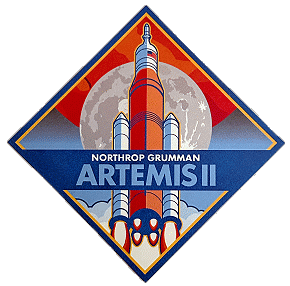 |
|||
Launch, orbit and landing data
walkout photo |
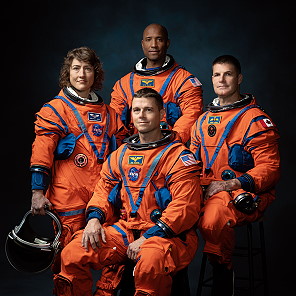 |
||||||||||||||||||||
alternative crew photo |
alternative crew photo |
||||||||||||||||||||
alternative crew photo |
alternative crew photo |
||||||||||||||||||||
alternative crew photo |
alternative crew photo |
||||||||||||||||||||
poster |
alternative crew photo |
||||||||||||||||||||
Crew
| No. | Surname | Given names | Position | Flight No. | Duration | |
| 1 |  |
Wiseman | Gregory Reid | CDR | 2 | 9d 01h 32m 15s |
| 2 | |
Glover | Victor Jerome | PLT | 2 | 9d 01h 32m 15s |
| 3 | |
Koch | Christina Hammock "Nana" | MS | 2 | 9d 01h 32m 15s |
| 4 |  |
Hansen | Jeremy Roger | MS | 1 | 9d 01h 32m 15s |
Crew seating arrangement
|
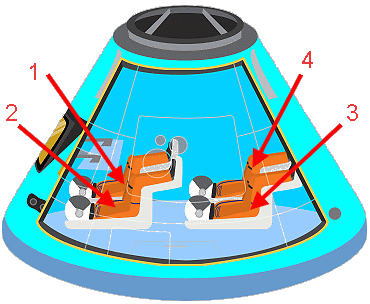 |
|
||||||||||||||||||||
Backup Crew
|
||||||||||||||||||||||||||
Hardware
| SLS-System: | 97M62020-003 |
| Launch vehicle: | SLS Block 1 |
| Spacecraft: | Orion CM-003 |
Flight
|
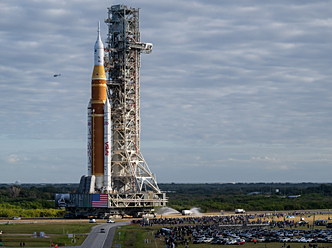
Artemis II is the second scheduled mission of
NASA's
Artemis program and the first scheduled crewed mission
of
NASA's
Orion spacecraft, was planned to launch by the Space
Launch System (SLS) in February 2026. The crewed Orion spacecraft will perform
a lunar flyby test and return to Earth.
Artemis II is planned to be the first crewed
spacecraft to travel to the Moon, or beyond low Earth orbit, since
Apollo 17 in 1972. The mission
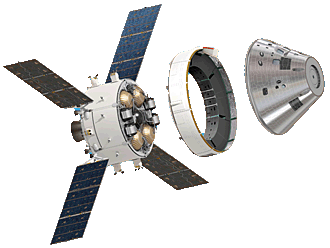
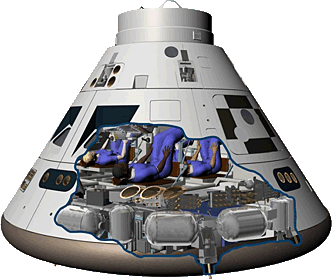
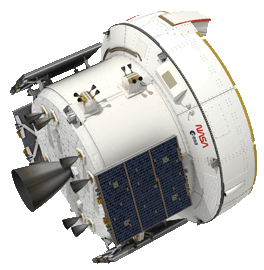
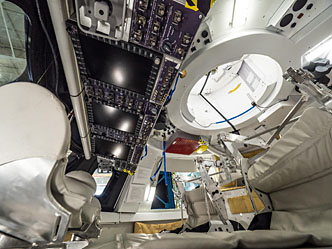
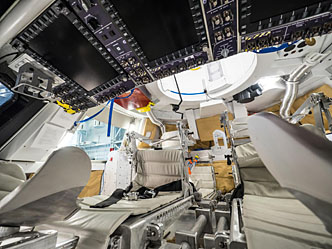
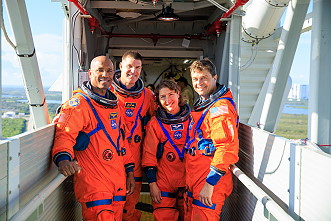
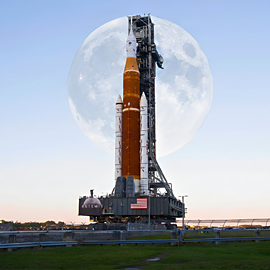
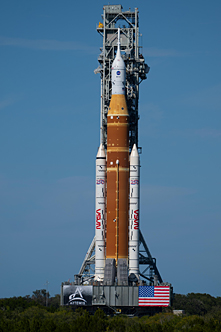
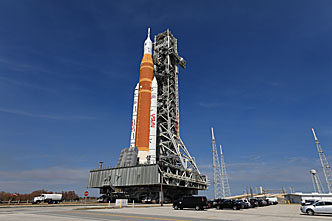
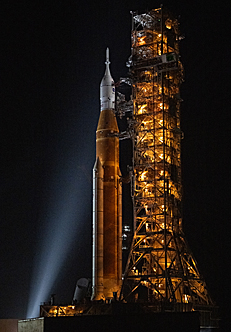
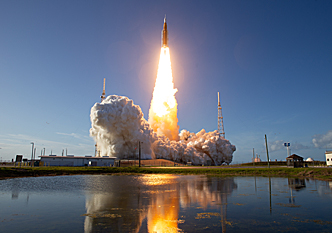
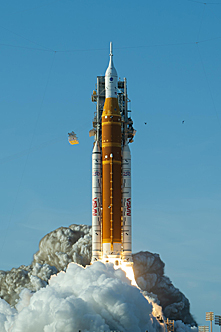
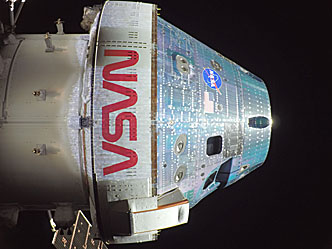
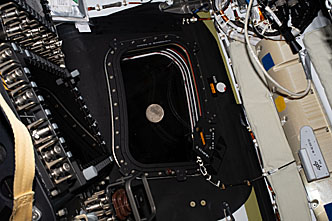
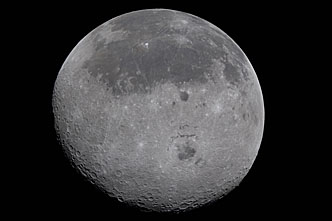
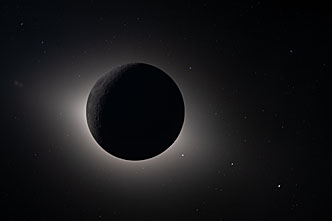
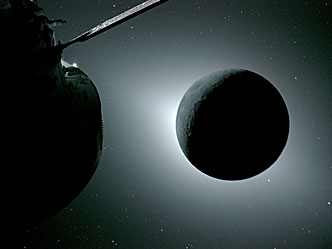
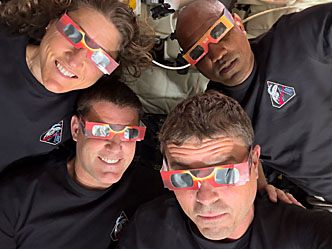
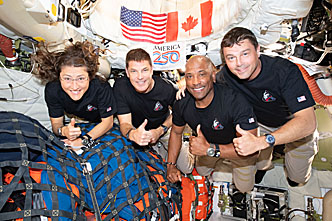
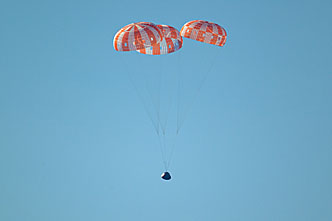
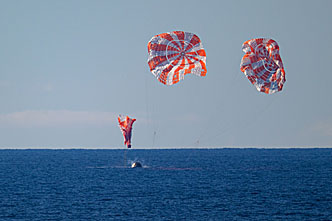
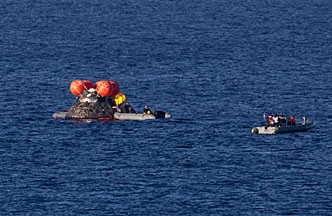
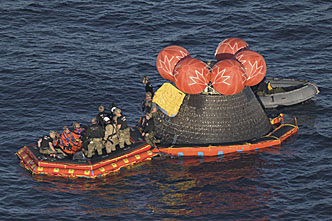
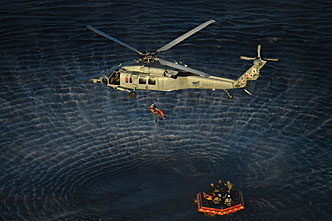
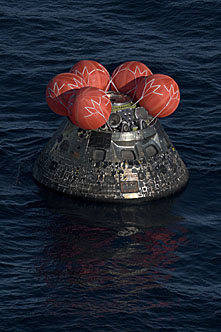
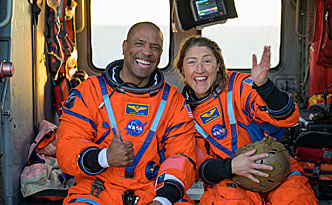
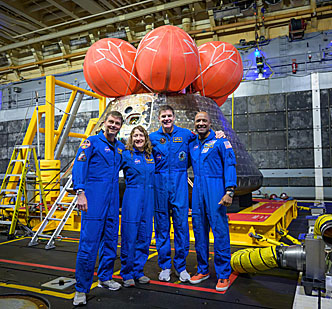
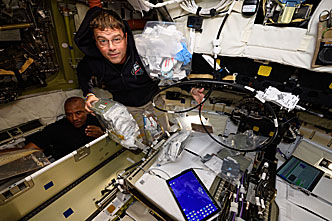
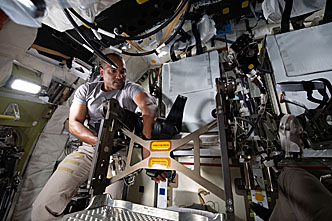
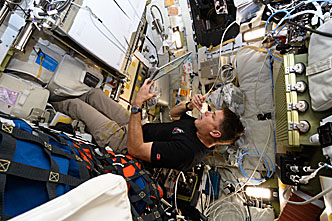
profile is similar to Apollo 8. Orion is a partially reusable crewed spacecraft used in NASA's Artemis program. The spacecraft consists of a Crew Module (CM) space capsule and the European Service Module (ESM). Capable of supporting a crew of six beyond low Earth orbit, Orion can last up to 21 days undocked and up to six months docked. It is equipped with solar panels, an automated docking system, and glass cockpit interfaces modeled after those used in the Boeing 787 Dreamliner. A single AJ10 engine provides the spacecraft's primary propulsion, while eight R-4D-11 engines, and six pods of custom reaction control system engines, provide the spacecraft's secondary propulsion. Although compatible with other launch vehicles, Orion is primarily intended to launch atop a Space Launch System (SLS) rocket, with a tower launch escape system. For the first time in more than 50 years, astronauts on a NASA mission are bound to fly around the Moon after successfully completing a key burn of Orion's main engine. With the approximately six-minute firing of the spacecraft's service module engine on April 02, 2026, known as the translunar injection burn, Orion and its crew of Reid Wiseman, Victor Glover, Christina Koch, and Jeremy Hansen accelerated to break free of Earth's orbit and began the outbound trajectory toward Earth's nearest neighbor. Four astronauts aboard NASA's Artemis II test flight around the Moon made history at 17:56 UTC on April 06, 2026, traveling 248,655 miles (400,171 kilometers) from Earth, surpassing the record for human spaceflight's farthest distance previously set by the Apollo 13 mission in 1970. At its farthest point, crew inside the Orion spacecraft will have traveled about 252,760 miles (406,777 kilometers) before looping back toward our home planet, setting the new record for human spaceflight. The spacecraft landed 75 km southwest of San Diego. Recovery ship: USS John P. Murtha (LPD-26) is the 10th San Antonio-class amphibious transport dock ship of the United States Navy, and is named in honor of Congressman John Murtha (1932-2010) of Pennsylvania. John P. Murtha is homeported at Naval Base San Diego. Helicopter: Helicopter Sea Combat Squadron 23 (HSC-23), also known as the "Wildcards", are a United States Navy helicopter squadron based at Naval Air Station North Island in San Diego, California. The "Wildcards" currently fly the MH-60S Seahawk helicopter and the MQ-8C Firescout |
Photos / Graphics
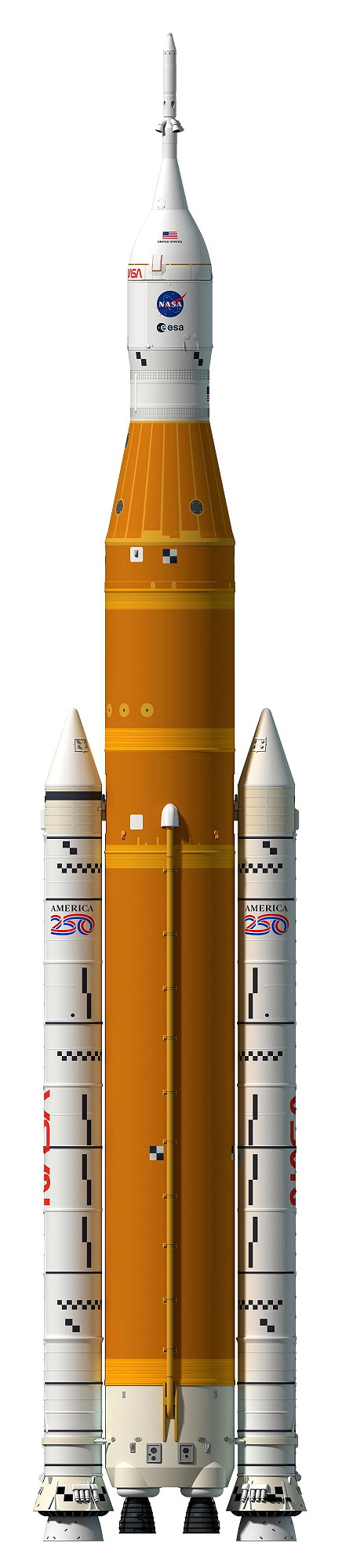 |
 |
 |
 |
 |
|
|
source of all photos is NASA |
||
 |
 |
|
 |
 |
|
 |
 |
|
 |
 |
 |
 |
 |
 |
 |
 |
 |
 |
 |
 |
 |
 |
 |
 |
 |
 |
 |
 |
 |
 |
 |
 |
 |
 |
 |
 |
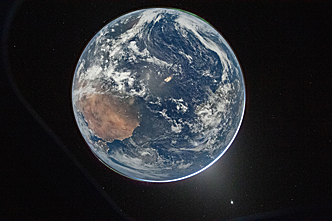
more photos of the Earth seen from Artemis II |
Moon flyby |
| © |  |
Last update on May 25, 2026.  |
 |